9 Useful Galaxy S22 Features Samsung Is Hiding From You
Samsung s22 best features what are the features of samsung s22 galaxy s22 new features galaxy s22 cool features features of samsung s22 5 useful materials 8 useful technologies inspired by nature useful synonyms for ielts band 9 pdf really useful boxes 9 litre

9 Useful Galaxy S22 Features Samsung is Hiding From You
If you have a Samsung Galaxy S22, S22 Plus or S22 Ultra in your hands, you've probably been savoring some of its major perks -- from the upgraded cameras to the sleek design. But the new S22 lineup is also loaded with some lesser-known features that can transform the way you use your phone.
Below, we'll take a closer look at the features flying below the radar, such as the force dark mode feature, hidden widgets on your lock screen and the Dolby Atmos immersive sound experience. And be sure to check out these settings changes that will take your Android experience to the next level.
Force all apps to use dark mode
The Samsung S22's built-in system-wide dark mode feature works with nearly every aspect of your phone, but it doesn't always play nice with third-party applications. Even if dark mode is enabled, some individual apps might continue to appear in light mode, which isn't great if you're trying to save battery or using your phone at night. Luckily, you can force any app to adopt dark mode with this hidden setting.
Before you can enable the force dark mode feature, you must first enable your phone's developer options. To do this, go to Settings > About phone > Software information and then tap Build number 7 times. Enter your passcode if prompted and you now have developer settings available.
To enable force dark mode, go to Settings > Developer options, scroll down to Hardware accelerated rendering and toggle on Force Dark mode. Now any time that dark mode is enabled, third-party apps that don't support the feature will be forced to use dark mode.
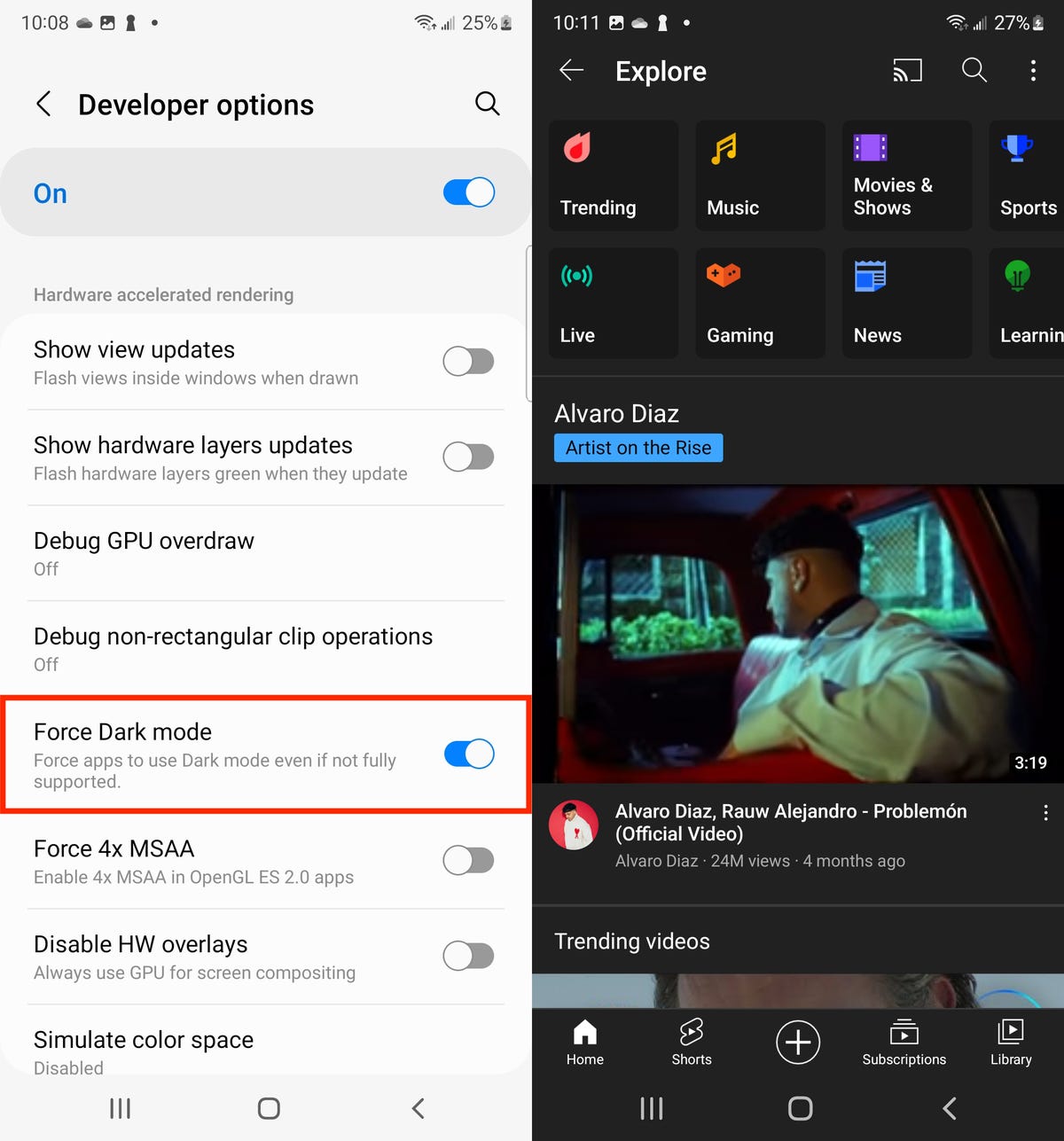
You can force all apps, even those that don't support it, to use dark mode.
NeStop your screen from turning off when you're looking at it
If you don't touch your screen for a bit, depending on how long your screen timeout is (the default is 30 seconds), it usually turns off quickly to help conserve battery. That's great and all, but if you're reading something and not touching your phone, your screen will keep falling asleep. Thankfully, there's a way to stop that.
In the Settings application, go to Advanced features > Motions and gestures and toggle on Keep screen on while viewing. From then on, the screen will continue to stay on as long as the front camera can detect your face and your eyes looking at it.

Stop your screen from automatically turning off when you're reading.
Nelson Aguilar/CNETTurn on Dolby Atmos for cinematic surround sound
Your Galaxy S22 features Dolby Atmos, which gives your phone high-quality surround sound, whether you're watching a movie or simply listening to your favorite artist on Spotify. However, this sound setting isn't enabled by default, so you'll have to turn it on manually.
To enable Dolby Atmos, go to Settings > Sound quality and effects and then toggle on Dolby Atmos. By default, Dolby Atmos will then turn on automatically for whatever you're listening to, but if you tap on Auto, you can configure that so Dolby Atmos only turns on when you're watching a movie, listening to music or talking on the phone. Also, if it's not already on, enable Dolby Atmos for gaming to get surround sound when you game on your phone.

Get surround sound for when you watch movies or listen to music on your phone.
Nelson Aguilar/CNETAutomatically enable power saving feature to help save battery
Depending on how much you use your Galaxy S22, your battery might be close to dead as early as midday. That's even more likely if you spend a lot of time watching videos on YouTube or scrolling through Instagram. However, if you don't have your charger handy, there are some ways to help save battery life -- like automatically enabling your phone's adaptive power saving feature.
You can turn on the automatic power saving feature in Settings > Battery and device care. In the Device care page, tap the three-dot menu button in the top-right and then tap Automation in the menu that appears. Toggle on Adaptive power saving and your S22 will go into power saving mode automatically depending on your usage patterns. The power saving mode feature may stop background refresh or turn on the Always On Display; this may vary.
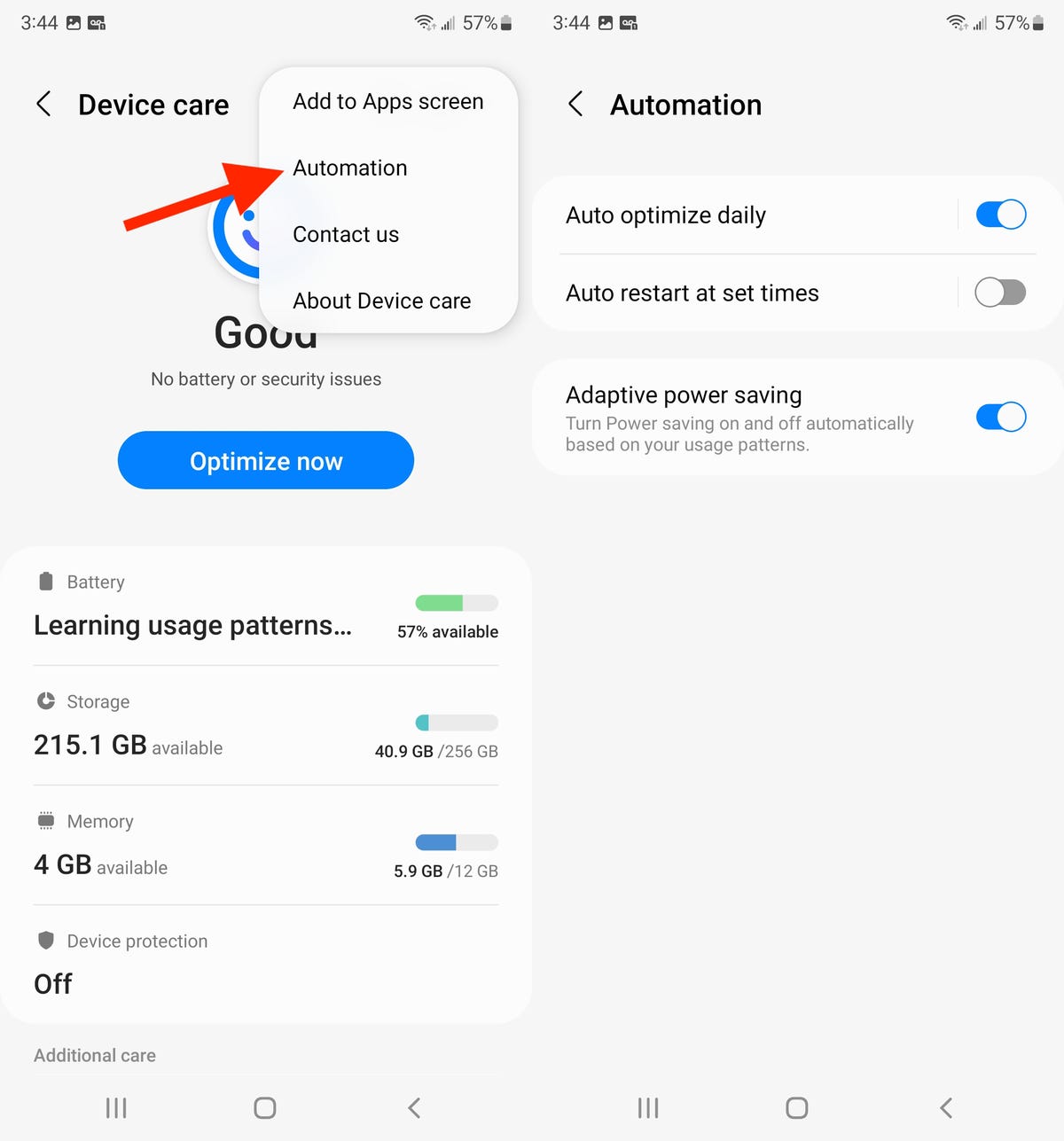
Help conserve your phone's battery with this automation.
Nelson Aguilar/CNETView and remove/add hidden widgets on lock screen
Notifications usually live on your lock screen, but on the Galaxy S22 you also have the option to add widgets -- they're just sort of hidden. If you want to view your existing lock screen widgets, simply tap on the time at the top of the screen. The default widgets which should appear include Music, Next alarm and Bixby Routines.
To remove or add widgets to your lock screen, tap Settings at the bottom of the lock screen when the widgets are in view. Now you can untoggle any widgets you want to get rid of and toggle on any widgets you want to add to your lock screen. To rearrange the widgets, tap on Reorder and then tap on the arrows to move the widgets around, top to bottom.
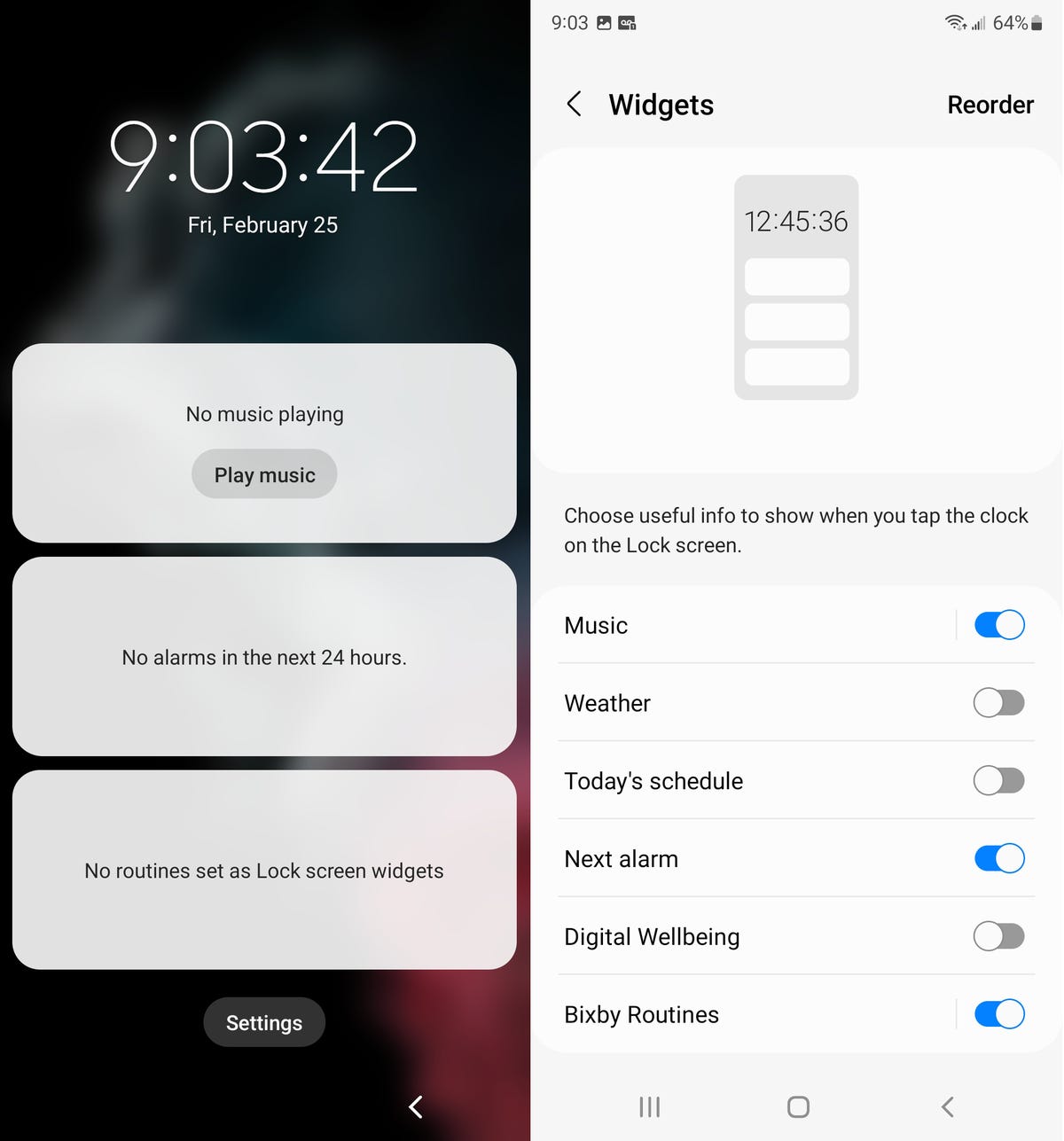
Tap on the time to view your widgets.
Nelson Aguilar/CNETAdd an extra button to your navigation bar
The navigation bar at the bottom of your screen helps you quickly go back, go home and view all of your open apps, with a single tap. It's how you maneuver around your Galaxy S22, and you can make it even better by adding an extra button to it, which you can use to do things such as dim your screen or mute all sounds.
If you go to Settings > Accessibility > Advanced settings > Accessibility button, you can then choose to add a button to either your navigation bar or to float over other apps. To choose what the button does, tap on Select actions: there you can choose from over a dozen options, including magnification, amplifying ambient sound and other useful functions.
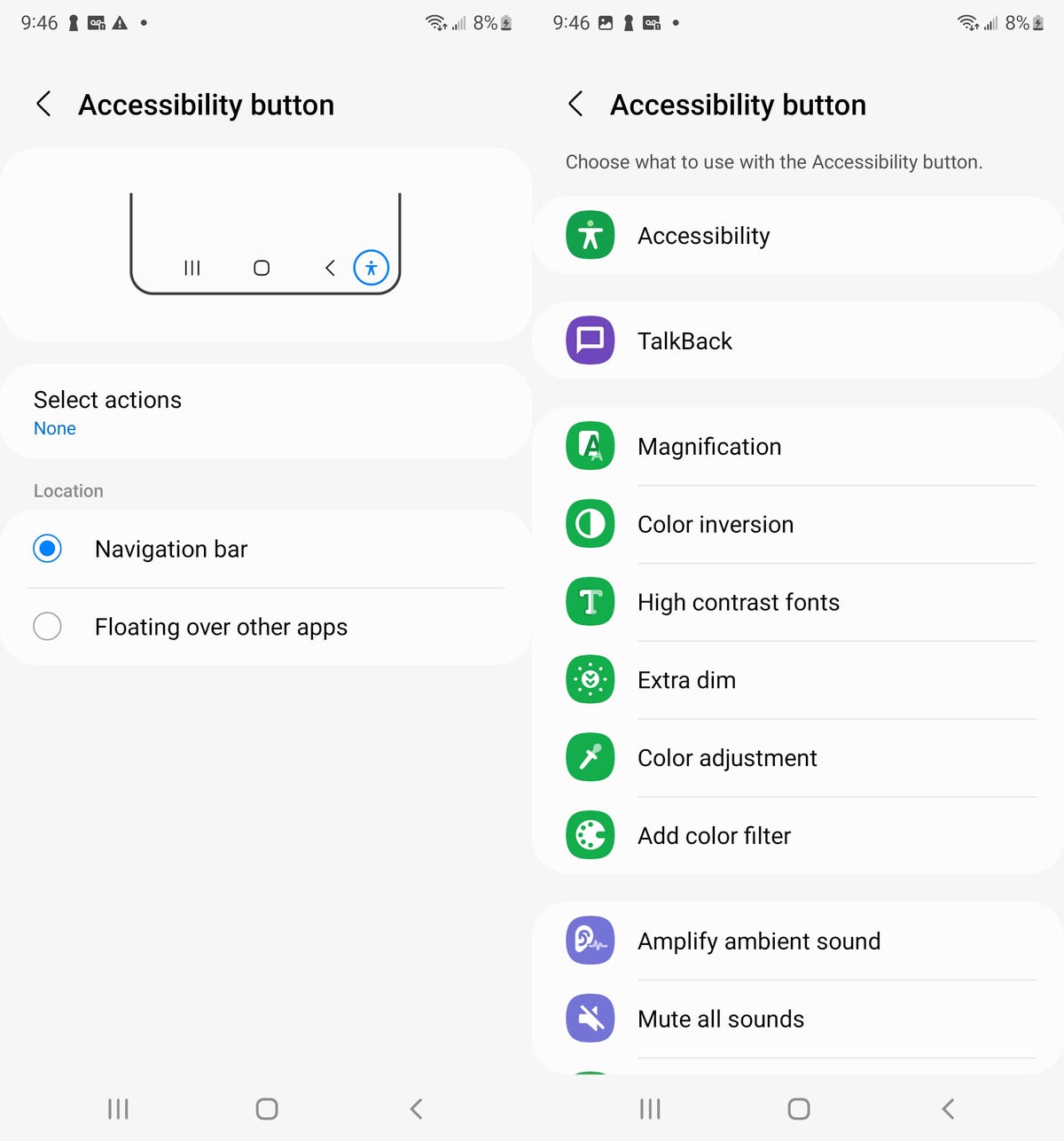
You can add an extra button to your S22's navigation bar at the bottom of the screen.
Nelson Aguilar/CNETStop Bixby from accidentally opening whenever you hold the side button
Bixby, Samsung's personal voice assistant, allows you to run any number of commands with just your voice. Speak and you can play an album from Spotify, text your friend or find photos from a vacation you took last year. By default, the side button on the Galaxy S22 wakes up Bixby, but if you don't use the voice assistant, that might be kind of annoying because it's easy enough to accidentally trigger.
If you don't want to bring up Bixby anytime you press down on the side button, go to Settings > Advanced features > Side key. From there, you can choose to instead open the power off menu (power off, restart and emergency mode) when you press and hold down on the side button. You can also change what happens when you double-press the side key, or disable that feature altogether.

If you don't use Bixby, you can prevent it from opening when you hit the side key.
Nelson Aguilar/CNETUse the S Pen to quickly translate text (instead of just drawing)
The S Pen, which is new to the Galaxy S series, isn't just for drawing or writing. If you pull out the stylus from your Galaxy S22 Ultra, you can press down on the pen's button to bring up the Air Command menu and choose from several actions: create a note, send a live message, draw an AR Doodle and more.
One of the best S Pen features is the ability to translate text by hovering your pen over a word. To translate text with your S Pen, choose the Translate option from the Air Command menu, select which language you would like to translate from and to and then simply hover the pen over the word you want to translate, without touching the screen. After a second of loading, a Google Translate window will appear, with the word in blue and the translation in black. You can also tap on the copy button to save the translation to your clipboard.

You can use your S Pen to do more than just write and draw.
Nelson Aguilar/CNETHide an app without having to permanently delete it
Although you probably use most of the applications on your Galaxy S22, there might be instances where you use an app once and then don't need it. You could delete it permanently from your device, but if you think you'll need it again, you can always just hide the application.
To hide an app, long-press on the home screen and tap Home Screen Settings and then on Hide Apps. This will bring up a menu showing you all the apps downloaded to your phone. Select the app or apps you want to hide. The applications should then disappear from your home screen, as well as your apps folder and settings. If you want to bring the app back, just perform the same actions as above, but this time uncheck the apps from the Hide Apps section.
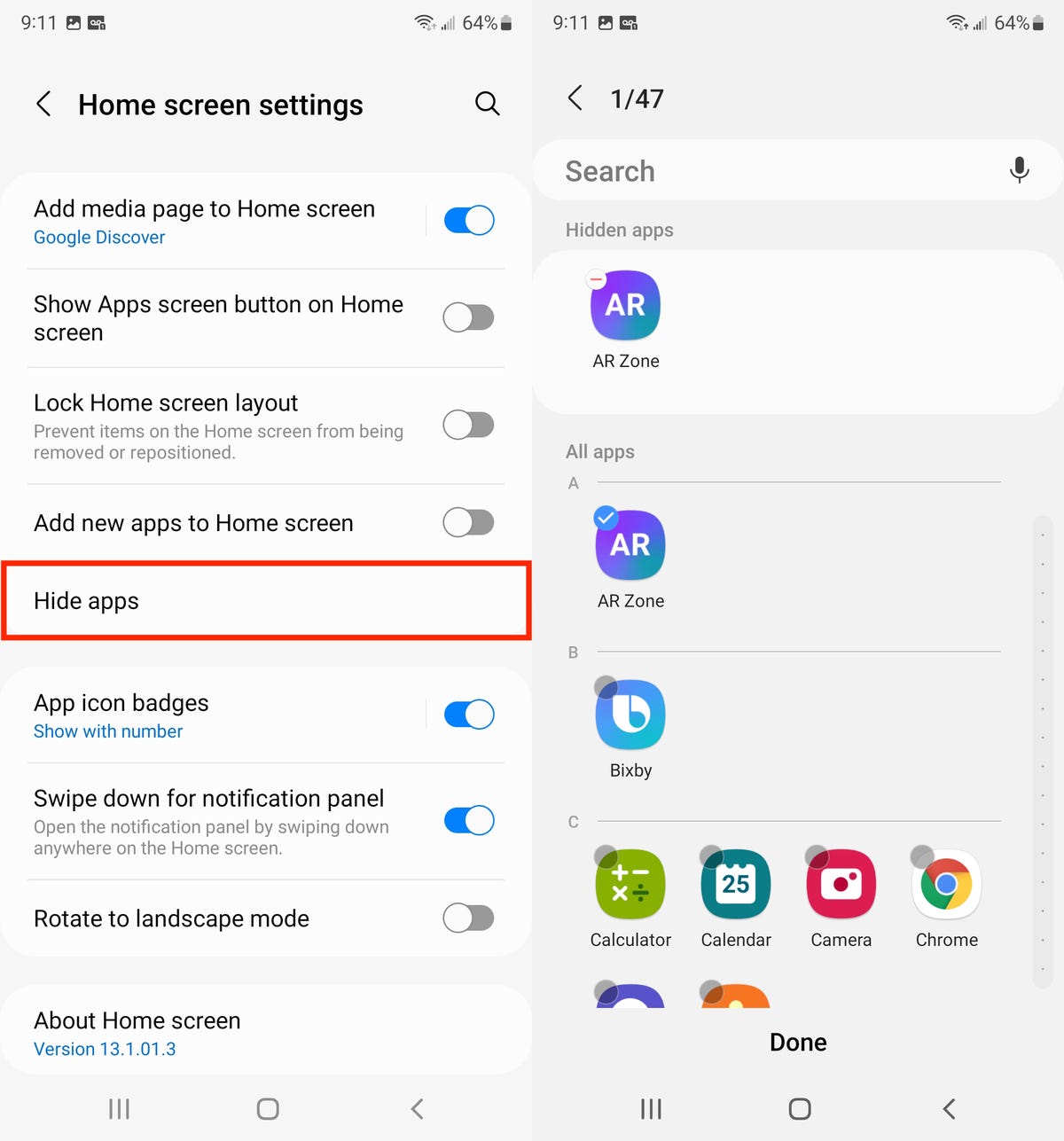
Instead of deleting an app, you can just hide it.
Nelson Aguilar/CNET§
Android 13 is finally here for supported Google Pixel devices, but if you can't currently update, there are other ways to improve your Android's performance without a major software overhaul. No matter if you have a Samsung Galaxy, Motorola or OnePlus -- you can optimize your battery life and speed up your phone by tinkering with the settings you already have.

Note that not all Android devices are the same, and phone manufacturers often put their own software on top of Android, so just be aware that certain settings may be missing or in a different place depending on the version of Android you're running and the maker of your phone.
Want more Android tips? Check out these five tips to make your Android feel like new again and how to stop giving your Android apps invasive permissions (and why that's important).

An overly bright display will drain your battery incredibly fast.
Óscar Gutiérrez/CNETSettings to improve your battery life
Living with a phone that has poor battery life can be infuriating, but there are some steps you can take to maximize each charge right from the very beginning:
1. Turn off auto screen brightness or adaptive brightness and set the brightness level slider to under 50%.
The brighter your screen, the more battery power it uses.
To get to the setting, pull down the shortcut menu from the top of the screen and adjust the slider, if it's there. Some phones may have a toggle for auto brightness in the shortcut panel; otherwise, you need to open the settings app and search for "brightness" to find the setting and turn it off.
2. Use Adaptive Battery and Battery Optimization.
These features focus on learning how you use your phone, including which apps you use and when, and then optimizing the apps and the amount of battery they use.
Some Android phones will have a dedicated Battery section in the Settings app, while other phones (looking at you, Samsung) bury these settings. It's a little different for each phone. I recommend opening your settings and searching for "battery" to find the right screen. Your phone may also have an adaptive charging setting that can monitor how quickly your phone battery charges overnight to preserve its health.
Why you should use Dark mode more often
Another way to improve battery life while also helping save your eyes is to use Android's dedicated dark mode. Any Android phone running Android 10 or newer will have a dedicated dark mode option.
According to Google, dark mode not only reduces the strain that smartphone displays cause on our eyes but also improves battery life because it takes less power to display dark backgrounds on OLED displays (used in most flagship phones) than a white background.
Depending on which version of Android your phone is running, and what company made your phone, you may have to dig around the settings app to find a dark mode. If your phone runs Android 10 or newer, you'll be able to turn on systemwide dark mode. If it runs Android 9, don't despair. Plenty of apps have their own dark mode option in the settings that you can use whether or not you have Android 10.
To turn it on dark mode, open the Settings app and search for Dark Mode, Dark Theme or even Night Mode (as Samsung likes to call it). I suggest using dark mode all the time, but if you're not sure, you can always set dark mode to automatically turn on based on a schedule, say from 7 p.m. to 7 a.m. every day, or allow it to automatically switch based on your location at the time of sunset and sunrise.
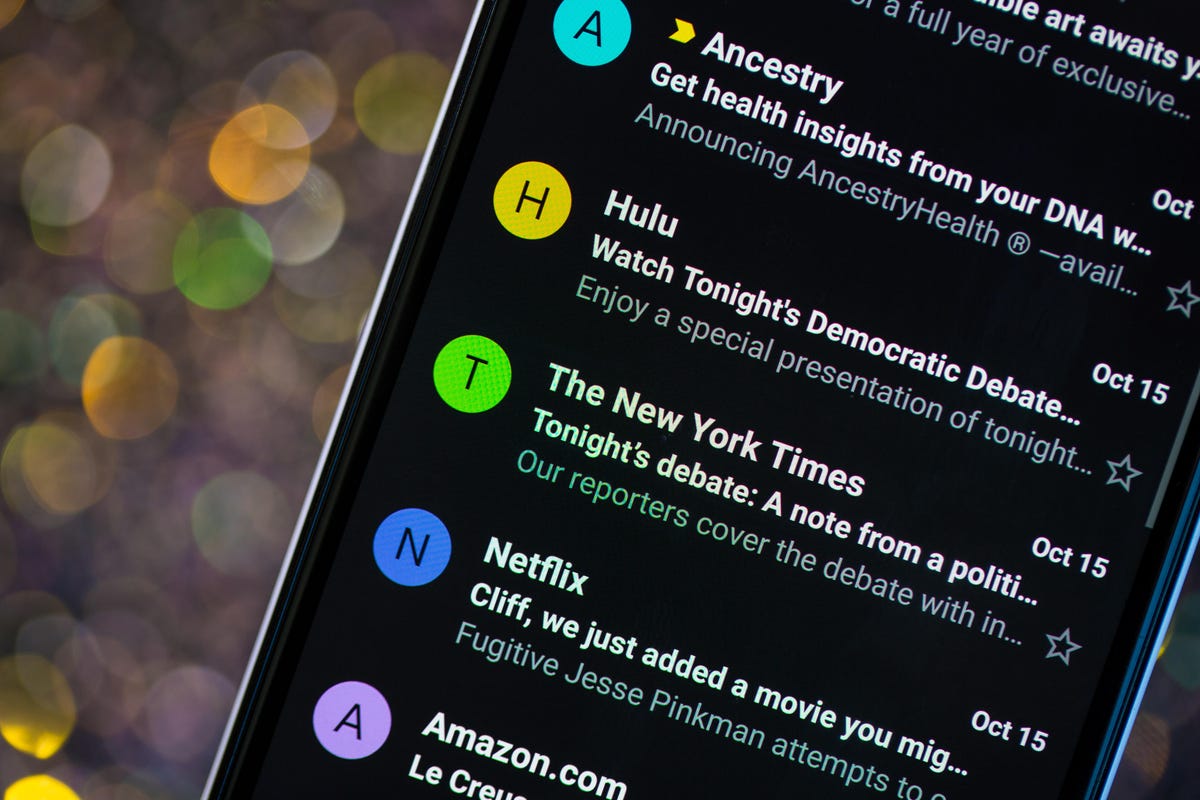
Using dark mode on any phone is an easy and good-looking way to save battery.
CNETKeep your home screen free of clutter
Planning to hit up the Google Play Store for a bunch of new Android apps? Be prepared for a lot of icon clutter on your home screen, which is where shortcuts land every time you install something.
If you don't want that, there's a simple way out of this: Long-press on an empty area of your home screen and tap Settings. Find the option labeled something along the lines of Add icon to Home Screen or Add new apps to Home Screen and turn it off.
Presto! No more icons on the home screen when you install new apps. You can still add shortcuts by dragging an app's icon out of the app drawer, but they won't appear on your home screen unless you want them to.
Read more: Best Android Phones You Can Buy in 2022
Set up Do Not Disturb so that you can better focus
If your phone routinely spends the night on your nightstand, you probably don't want it beeping or buzzing every time there's a call, message or Facebook alert -- especially when you're trying to sleep. Android offers a Do Not Disturb mode that will keep the phone more or less silent during designated hours. On some phones, this is referred to as the Downtime setting or even Quiet Time.
Head to Settings > Sounds (or Notifications), then look for Do Not Disturb or a similar name. If you can't find it, search for it using the built-in search feature in your settings.
Using the feature, you can set up a range of hours when you want to turn off the digital noise. But don't worry, any notifications you get while Do Not Disturb is turned on will still be waiting for you when you wake up. Also, you can typically make an exception that allows repeat callers and favorite contacts' calls to go through. Turn that on. If someone is calling you in an emergency, odds are they are going to keep trying.
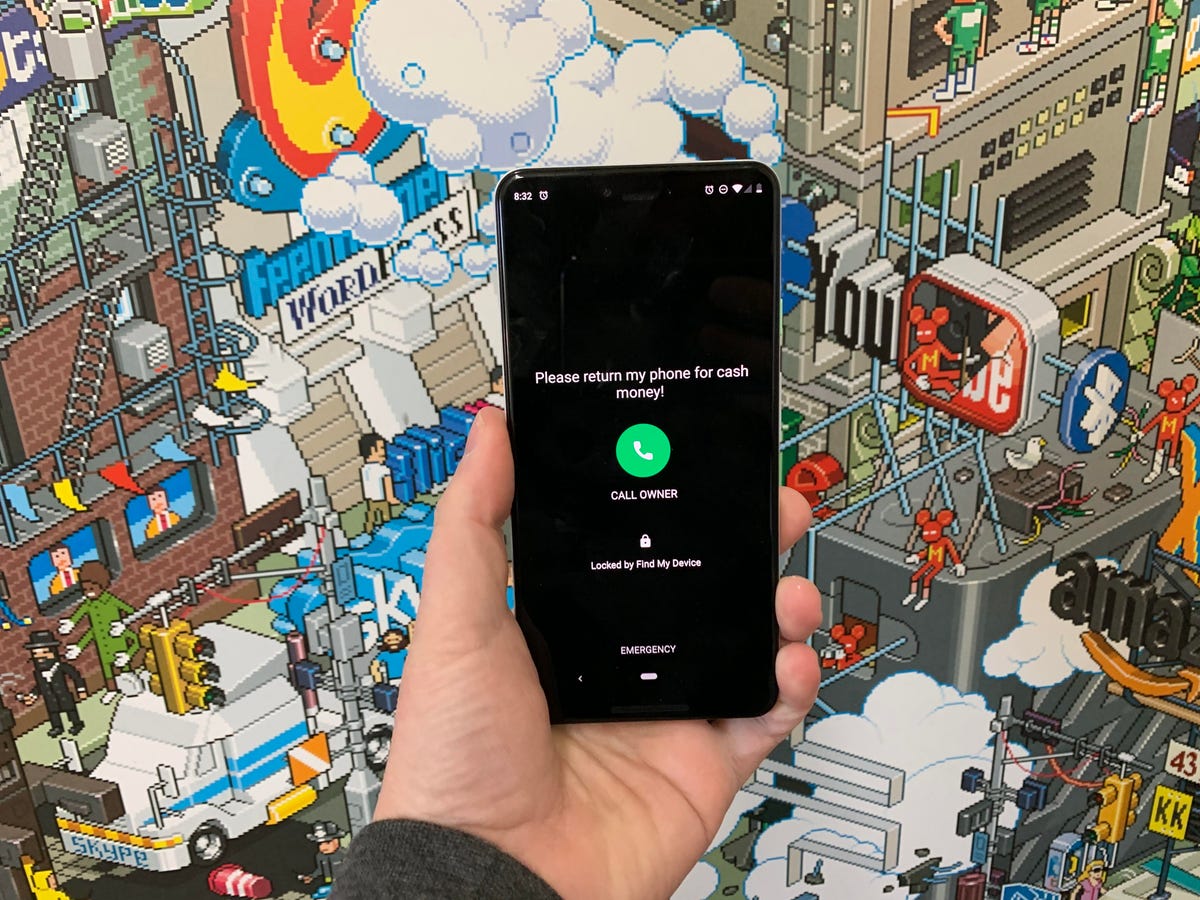
What someone who finds a lost or stolen Android phone will see after you use Find My Device to lock it.
Jason Cipriani/CNETAlways be prepared in case you lose your phone or it's stolen
Is there anything worse than a lost or stolen phone? Only the knowledge that you could have tracked it down if you had turned on Google's Find My Device feature.
To set yourself up for a successful recovery, here's what you need to do: Open the Settings app and then search for Find My Device. It's usually in the Security section of the Settings app.
Or if you have a Samsung device, you can use Samsung's Find My Mobile service found in Settings > Biometrics and security > Find My Mobile.
Once that's enabled, you can head to android.com/find from any PC or mobile device and sign in to your account. Samsung users can visit findmymobile.samsung.com to find a lost phone.

Losing a phone is never a fun experience.
Angela Lang/CNETIf you run into any trouble setting any of this up, be sure to read through our complete guide to finding a lost Android phone.
Assuming your phone is on and online, you should be able to see its location on a map. From there you can make it ring, lock it, set a lock screen note to tell whoever has it how to get it back to you or, worst-case scenario, remotely wipe the whole thing.
And always keep your phone up to date
As obvious as it may seem, bugs and other issues slowing down your Android device could potentially be fixed with a simple software update.
Before you download and install the latest software update, make sure your device is connected to Wi-Fi, or else this won't work.
Now, open the Settings application and type in Update. You'll then either see Software update or System update -- choose either one. Then just download the software, wait for a few minutes and install it when it's ready. Your Android device will reboot and install the latest software update available.
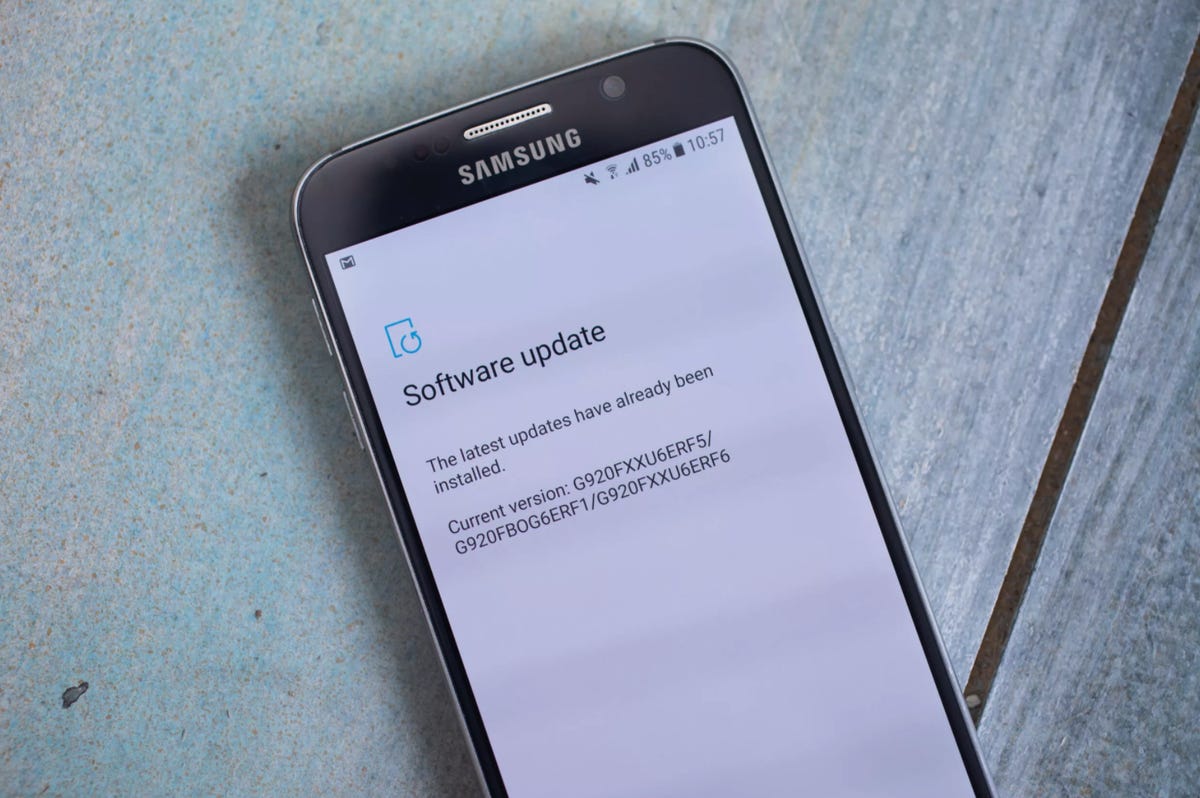
Always keep your phone updated to the latest software to avoid bugs and other issues.
There's a lot more to learn about a new phone, of course. If you have a phone with Android 12, here are several hidden features you should know about. Plus, check out CNET's list of the best cases for your Samsung phone. More of an Apple fan? We have tips for boosting your iPhone's performance, too.
Source

